Sources
Generate power from sun, wind and fuel.
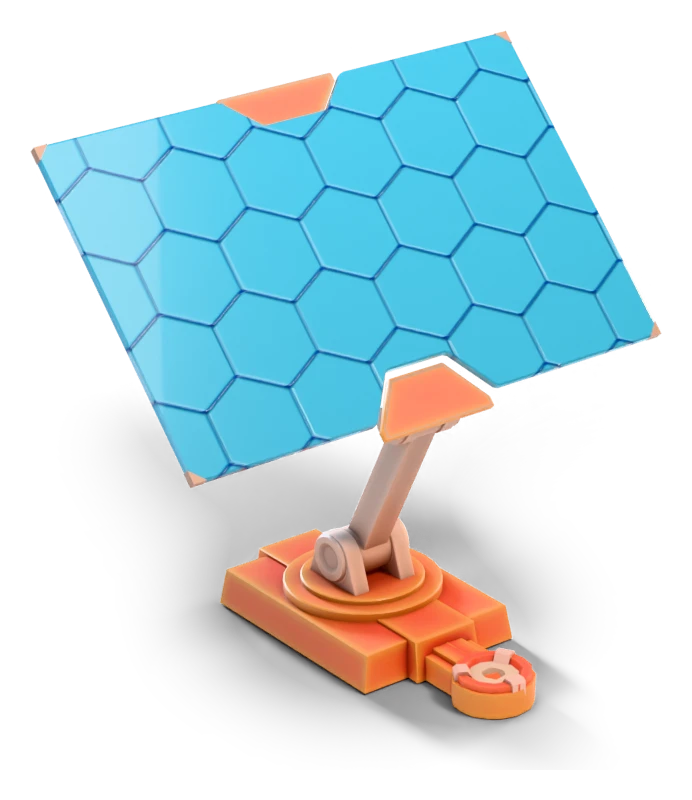
Solar Panel
Converts sunlight into electricity: 100 power under clear skies, 70 when cloudy, 10 in rain, 5 in storms - and 0 at night.
Solarpanel (Roof)
Snaps onto timber, brick and glass roofs and makes the same power as the Solar Panel: 100 under clear skies, 70 when cloudy, 10 in rain, 5 in storms and 0 at night.
Sky Turbine
Generates power from wind on a 35 m tether. Output rises with wind intensity from 600 to 700 and peaks during storms - the strongest producer in the game.
Windmill
Output follows the wind intensity: 200 at intensity 0 and 1, then 210, 220, 230, 240, 260 and 280, up to 300 at intensity 8.
Energy Generator
Burns any item with a burn time for a steady 120 power, from Wood and Sticks to furniture. The Wax Briquette burns longest.
Storage
Bank surplus energy for night and storms.
Battery
Stores 96,000 power and charges or discharges at up to 200 per second.
Distribution
Move power across the grid, wired or wireless.
Cable Connector
Links energy devices with a visible cable.
Wireless Power Base
Draws 50 power from the wired grid and connects wireless devices within 20 m of it that are not yet connected - no cables needed.
Cable Holder (Pillar)
Mounts on a pillar to hold cables. It is not part of the grid itself: it neither draws nor makes power.
Cable Holder (Wall)
Mounts on a wall to hold cables. It is not part of the grid itself: it neither draws nor makes power.

Logic
Sense conditions and automate the network.
Daytime Sensor
Outputs a small signal in daylight - it needs clear sky above it.
Rain Sensor
Sends a signal while it rains.
Lever & Controlable Logic Block
The Lever interrupts a connection by hand. The Controlable Logic Block does it automatically: a signal on its control input opens or closes the circuit, and an invert button flips the logic.
Consumers
Irrigation, feeding and monitoring devices.
Sprinkler
An automated irrigation device that waters nearby crops when connected to the energy grid.
Powered Water Trough
An energy-powered trough that automatically refills water for animals when connected to the grid.
Network Display
A wall-mounted screen with live grid stats: production, consumption, balance and how many devices are active.

Machines
Automated bots, drills and processors.
Energy Furnace
An electric furnace that smelts ores, bakes food and boils water without fuel. Same speeds as the regular furnace - it just runs on the grid instead of burning items.
Automatic Drill
Placed on an ore patch, it mines automatically while powered (120) and stores the ore in its inventory.
Forester Bot
A robot that chops mature trees and replants saplings. Draws 400 power, the most of any machine.
Fishing Drone
A drone that works a lake while powered (160): every 100 to 120 seconds it pulls one item from the lake's loot table into its 3-slot inventory.
Transport Drone
Flies resources from one station to another, even between islands. Draws 300 power.
Automatic Feeder
The powered feeding trough (50 power), crafted from a Feeding Trough, 5 Cobalt and 5 Silicon.
Recycler
Returns the crafting ingredients of the item put in. Plants and items without a recipe cannot be recycled. Draws 25 power.
- Chicken Incubator
A hatchable chicken egg inside hatches into a chick after 60 seconds of powered incubation (200 power). If the power cuts out, hatching is aborted.
Lootchest Detector
A handheld device that shows the distance to the nearest loot chest. It needs no power.
Power Production
How much power each source makes. Solar follows the weather; the windmill and sky turbine follow wind intensity.
By weather
| Source | Clear | Cloudy | Rain | Thunderstorm | Night |
|---|---|---|---|---|---|
| Solar Panel | 100 | 70 | 10 | 5 | 0 |
| Solarpanel (Roof) | 100 | 70 | 10 | 5 | 0 |
By wind intensity (0-8)
| Source | 0 | 1 | 2 | 3 | 4 | 5 | 6 | 7 | 8 |
|---|---|---|---|---|---|---|---|---|---|
| Windmill | 200 | 200 | 210 | 220 | 230 | 240 | 260 | 280 | 300 |
| Sky Turbine | 600 | 600 | 630 | 630 | 650 | 650 | 680 | 680 | 700 |
Wind intensity runs 0 to 8 and storms drive it to the top; sky turbine values use the game brackets 0-1, 2-3, 4-5, 6-7, 8. Generator: a flat 120 while it has fuel, regardless of weather.
Power draw per device
| Device | Draw |
|---|---|
| Forester Bot | 400 |
| Transport Drone | 300 |
| Energy Furnace | 200 |
| Incubator | 200 |
| Fishing Drone | 160 |
| Auto Drill | 120 |
| Water Trough | 50 |
| Wireless Connector | 50 |
| Sprinkler | 40 |
| Recycler | 25 |
| Daylight Sensor | ±1 |
| Rain Sensor | 1 |
| Battery | ±200 (capacity 96,000) |
Machine throughput
| Machine | Draw | Cycle |
|---|---|---|
| Fishing Drone | 160 | 1 / 100-120s |
| Incubator | 200 | 60s |
| Energy Furnace | 200 | 15-60s |
| Auto Drill | 120 | 0.25s |
Sensors and logic
Sensors and switches automate the grid. The Daytime Sensor outputs power in daylight (it needs clear sky above), the Rain Sensor while it rains. Wire either into the control input of a Controlable Logic Block: it opens or closes the circuit behind it based on that signal, and a button on the block inverts the behavior. The Lever is the manual version of the same switch.
Wireless Power
The Wireless Power Base (50 power) sits on the wired grid and connects wireless devices within 20 m of it that are not yet connected, such as the Wireless Light and the Small wireless lamp. No cables are needed.
Postbox & Recycler
Two machines for reclaiming value from unwanted items.
Postbox: items put into the Postbox are converted into Vending Machine Tickets at each item's ticket value, 1 for most items. The tickets are spent at the Vending Machine.
Recycler: The Recycler reverses a crafting recipe and returns the ingredients of the inserted item. Some item types cannot be recycled. Both machines draw 25 power.
Questions
How do I set up a power grid in Solarpunk?
Place a power source (Solar Panel, Windmill, or Sky Turbine), connect it to a Battery with Cable Connectors, then wire consumers (lights, sprinklers, machines) to the grid. The Network Display shows real-time stats.
How do logic blocks work?
There are two: the Lever interrupts a circuit manually, and the Controlable Logic Block opens or closes a circuit based on its control input. Put a Daytime Sensor or Rain Sensor on the control side and use the invert button to flip the behavior. There are no AND/OR gates - this relay is the whole logic system.
What machines can I automate?
The Drill mines ore deposits, the Forester chops and replants trees, the Fishing Drone pulls items from a lake's loot table, and the Transport Drone moves resources between locations - even across islands. All run on the energy grid.
How does wireless power work?
A Wireless Power Base on the wired grid connects wireless devices within 20 m of it, without cables.
Can crops be watered automatically in Solarpunk?
Yes. The Wireless Sprinkler waters every crop within 5 m and draws 6 power. Powered through a Controlable Logic Block with a Rain Sensor on the control input, it stops during rain. A Battery stores 96,000 power for the night.
How much power do machines use in Solarpunk?
The Forester draws the most at 400 power, ahead of the Transport Drone (300), Energy Furnace and Chicken Incubator (200 each), Fishing Drone (160), Drill (120) and Advanced Dock (100). The Recycler draws 25 and the Sprinkler 40.
How much energy does the Battery store in Solarpunk?
One Battery stores 96,000 power and charges or discharges at up to 200 per second. Producers fill it during the day, machines drain it at night. Place more Batteries to extend the buffer.