Traders
Who sells what in Graveyard Keeper 2: 19 traders with their stock, prices, Likes and Town orders.
People19
 19
19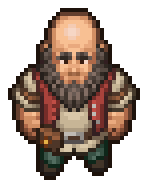 JanuariusVillage Tavern
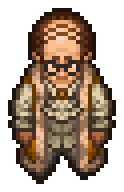 HermHerm's Store / Village
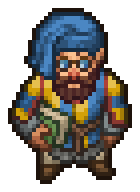 TrademasterMain Pier
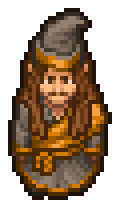 GunterAstrologer's Tower
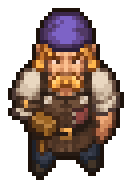 JackTown Warehouse
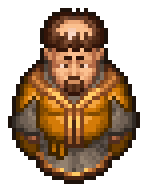 BishopRoyal Foundry
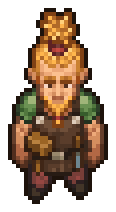 HaroldStilt Houses
 ApothecaryTown (a restored shop)
 AlchemistTown (a restored shop)
 Vegetable StandTown (a restored shop)
 TailorTown (a restored shop)
 Furniture MakerTown (a restored shop)
 BakerTown (a restored shop)
 Fish StandTown (a restored shop)
 JewelerTown (a restored shop)
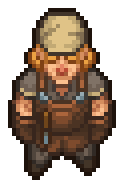 BuilderTown (a restored shop)
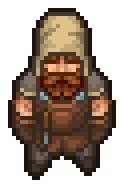 SmithyTown (a restored shop)
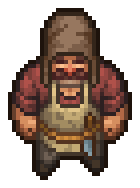 TavernTown (a restored shop)
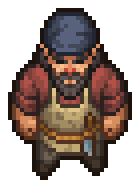 BreweryTown (a restored shop)
How it works
A trader with a shop keeps a normal stock of each item it deals in. At that stock an item costs its base price (Herm and the Trademaster add a fixed amount to some goods); buy the shelf empty and each next one costs more, sell it full and each next one pays less. Selling pays three quarters of the current price, never more than the item's base price. Fixed-price goods such as tools, weapons, armor and bags are the exception: buying one costs exactly its base price and selling one pays exactly its base price, whatever the stock. Traders pay out of their own money: every night it gets the trader's daily money, and the trader buys and sells at base price out of it to drift back toward its normal stock.
A trader buys only the goods on its own stock list, and some traders refuse a few of those at some tiers.

100 bronze make 1 silver and 100 silver make 1 gold. Prices on this wiki are written 1g 20s 5b.

Januarius, Herm and the 12 Town shops pay Likes for certain goods, up to a weekly cap per trader that resets on Pride day. Town orders pay Likes too.

Traders have up to three tiers, each with its own stock, daily money and Likes cap. Quests raise Januarius, Herm, Gunter and Jack; a Town shop's trader rises when its building is upgraded.
How trading works
How is a price set?
Each item has a base price and each trader a normal stock of it. The price of one is: base price x square root of (normal stock / current stock). At normal stock that is exactly the base price. Herm and the Trademaster add a fixed amount to the base price of some goods (the Trademaster's Gem costs 10 silver where its base price is 1 silver).
Why does the price rise during a purchase?
Every item bought lowers the stock, so the next one costs more. Buying out a shelf of 20 makes the last one cost 4.47 times the first (the square root of 20).
How much does a trader pay for an item?
75% of the current price, capped at the item's base price. Selling also raises the trader's stock, so each next item pays less. A fixed-price good always sells for exactly its base price.
Can a trader run out of money?
Yes. A trader only pays out of its own purse. Every night each trader gets its daily money (shown per tier on its page) and trades with the outside world, drifting back toward its normal stock.
What about fixed-price goods?
Bags, certificates, Town Gratitude, tools, weapons, armor, fishing rods, zombie collars, talismans and the Fish Stand's fish have a fixed price: buying one costs its base price and selling one pays its base price, however many the trader holds.
How do Likes from trading work?
Januarius, Herm and the 12 Town shops pay Likes for some goods. Each one sold adds to a Likes bar, and one Like is paid each time it fills. Each item only counts for a set number per week, and each trader pays at most its weekly Likes cap. Both reset on Pride day.
Why are seeds sold in packs of 4?
Seeds come in packs of 4 (planting takes 4 seeds), and a trader does not offer seeds when it has fewer than 4 left.